


21 Aug Industrial Control System
Industrial Control System for Faster, Smarter & More Efficient Automation
Industrial Control System has changed the way the modern industries function. The days when machines only did repetitive jobs on the production line are long gone. Now they can communicate, respond to changes, monitor things and even assist operators in making better decisions. And right in the middle of it is an Industrial Control System.
Control systems are used to keep machines and operations running smoothly from manufacturing plants and packaging units to water treatment facilities and process industries. They assemble controllers, sensors, drives, HMIs, motors and other automation equipment to allow different parts of a process to work together.
What Is an Industrial Control System?
An Industrial Control System (ICS) is a set of hardware and software that monitor and control industrial processes. In simple words it works as a brain for an automated operation. The system takes information from machines and sensors, analyse that information, and issues commands to various equipment. For example, say a motor needs to be slowed down, a temperature maintained within a specified range, or a conveyor stopped. The control system can do that automatically. Typical system has PLCs, HMIs, AC drives, servo drives, sensors, controllers and communication networks.
Why are industrial control systems relevant today?
There’s always pressure on industries to produce more, maintain quality and control costs. That’s difficult to do by hand. It can also result in inconsistent results, delays in production and unnecessary energy consumption. This is where an Industrial Control System makes a real difference. Good control systems are designed to monitor production continuously and to react quickly to changes. Operators can see what’s happening on a machine through an HMI, but the logic that runs the process belongs to the PLCs and controllers.
How an Industrial Control System Works
The working principle is fairly simple, even though the technology behind it can get pretty advanced. First, sensors collect information from the production process. This could include temperature, pressure, speed, level, position, or other operating conditions. That information is then fed to a PLC or industrial controller. The controller compares the information with program instructions, and then decide what to do next. Then the command is sent to an AC drive or servo drive to control the motor speed, torque or movement. At the same time, an HMI can display important information to the operator. If there is an abnormal condition, the system can also generate an alarm. So the basic flow is kind of like this: Sensors → PLC/Controller → Drives & Motors → Operation of Machine → Monitoring of HMI This continuous cycle allows the system to react quickly and to control the process.
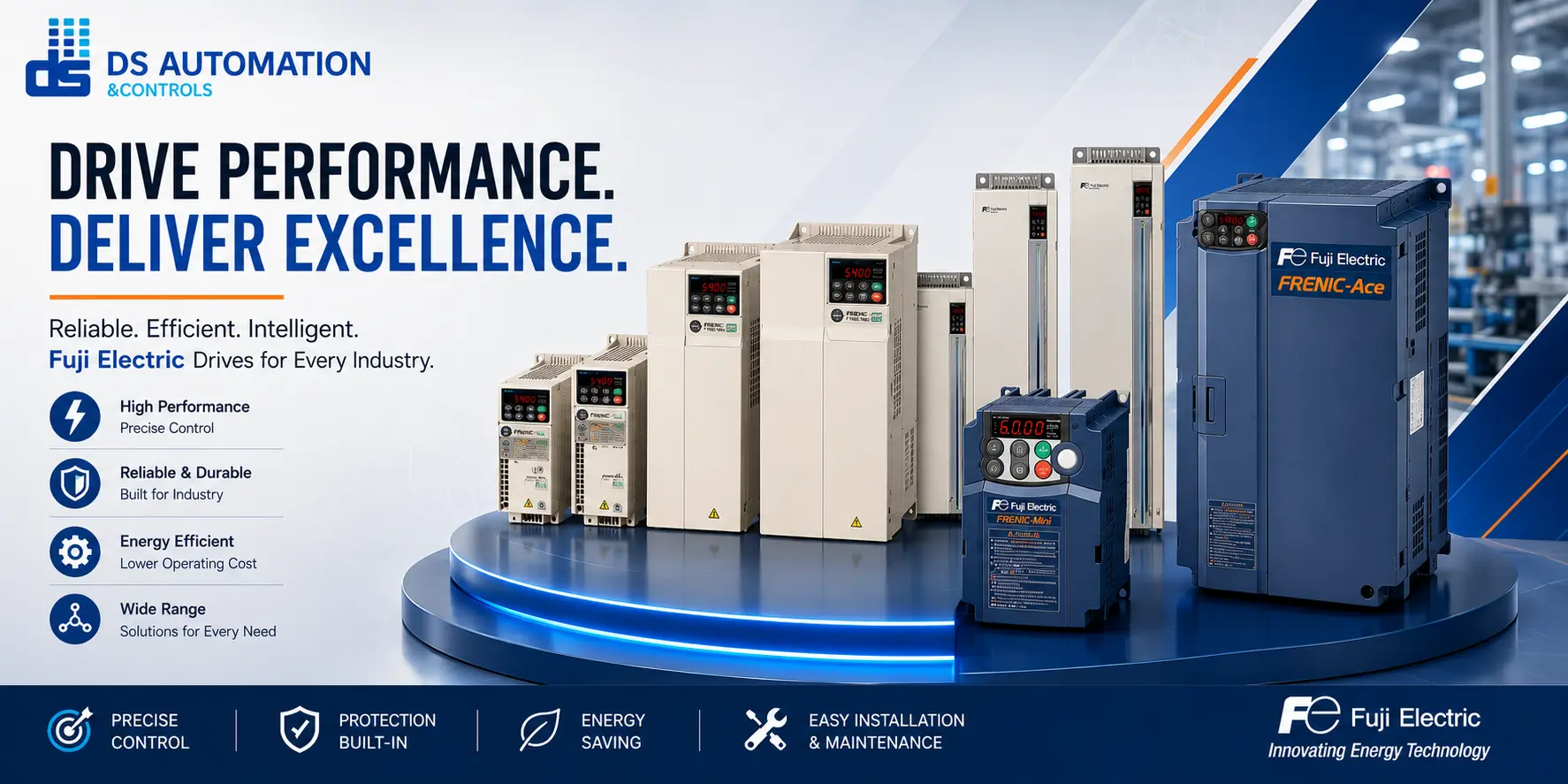
Drives for smart automation in industry Motors are integral to almost every industrial operation, but just switching a motor ON or OFF is not always the answer. Different processes require different speeds and different controls. This is the role of AC drives and variable frequency drives (VFDs). For example, Fuji Electric’s FRENIC range includes different drive solutions designed for a wide range of industrial applications. Depending on application and control requirements, products such as FRENIC MINI, FRENIC ACE, FRENIC MEGA, FRENIC VG and FRENIC AQUA can be integrated into automation systems. With proper drive control industries can more accurately set motor speed, improve process control and possibly prevent unnecessary energy consumption.
HMI Makes Machine Data Easier to Understand
Industrial machines generate a lot of information. But raw machine data isn’t very useful if an operator can’t understand it quickly. That’s where an HMI (Human Machine Interface) comes in. An HMI is a visual interface that allows operators to see the machine conditions, change settings, view alarms and other critical process information. The operator can get relevant information on one screen rather than manually checking each machine.
Fuji Electric MONITOUCH and V9 Series HMI solutions can be used in industrial automation applications where clear machine monitoring and operator interaction are required. A good HMI doesn’t just show data — it makes that data easier to act on.
Servo Systems for Precise Motion
Some industrial applications need more than basic motor speed control. They need precise movement. Think about CNC machines, robots, packaging equipment, printing machines or high-speed production systems. A little mistake in position can influence the final product.
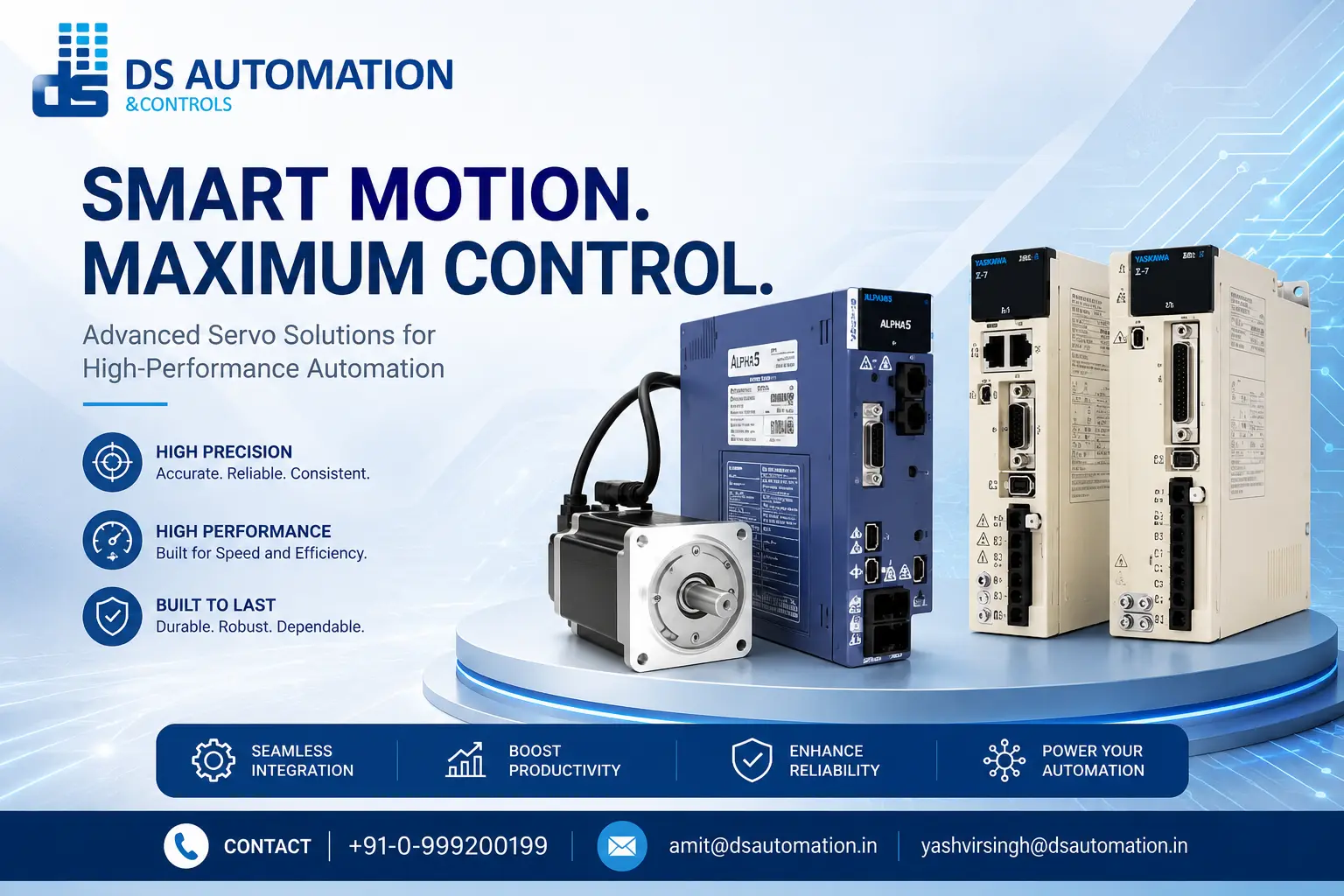
This is where servo drives and servo motors come into play. Fuji ALPHA 7,Fuji ALPHA 5, VeichiSD710, Servo VeichiSD700 High Performance Servo System Veichi servo motors are suitable for applications that require accurate and responsive motion control. In addition to positioning, acceleration and deceleration, servo technology can help machines move in a controlled manner.
Better Efficiency from Connected Automation
Efficiency is not simply producing more goods. It’s also about cutting down on waste, cutting down on downtime, controlling energy use and using available resources better. An Industrial Control System helps to tie together the different pieces of an operation. Operates motors. PLCs handle logic. HMIs give information. Sensors feedback in real time. Operators can find problems much faster with these parts working together.
For example, if a motor is running under conditions for which it is not designed, the system can generate an alarm. This allows the operator to investigate the problem instead of learning about it after production has stopped.
Industrial Control Systems for Diverse Industries
Industrial Control Systems can be used in a wide range of applications such as
- Manufacturing and production
- Packaging machinery
- Material handling
- Water and wastewater treatment
- HVAC and pumping systems
- Textile machinery
- Food and beverage processing
- Printing and converting
- Chemical and process industries
- Machine tools and precision equipment
This is why the role of the Industrial Control System will continue to increase.
From the PLC that runs machine logic to the HMI that shows real-time information, from the VFD that controls motor speed to the servo system that controls precise movement — all parts play a role. And when these technologies come together properly, something interesting happens: the factory becomes easier to manage, production becomes more predictable, and operators get better control over what’s going on the floor. Smarter dsautomation isn’t about replacing everything with machines. It’s about helping machines, people and processes work better together. For industries looking to improve their automation capabilities, a well-planned Industrial Control System can be a strong step toward faster, more efficient and more reliable operations.

No Comments